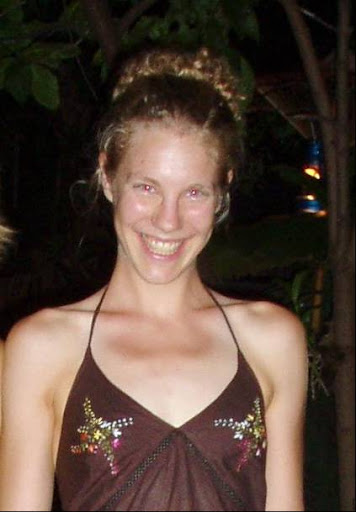
Starting next week, I will be in Bali for the UN COP13 climate change negotiations. I'm working with the Tropical Forest Group (TFG). Among other things, TFG will be sponsoring a large tree display outside the conference center and a dance show (traditional Balinese dance!) to visually illustrate the importance of forest conservation.
The group has also set up a blog that will give a running commentary of the conference.
Among other things delegates at COP13 will be negotiating post-2012 climate change strategies. One strategy set to receive tons of press in the upcoming conference is REDD (Reduced Emissions from avoided Deforestation in Developing countries). In the past, countries have not been able to trade carbon credits in this category. Currently, tropical deforestation causes about 20% of greenhouse gas emissions. So REDD is a potentially important part of any future emissions reduction strategy!
Wednesday, November 28, 2007

Saturday, November 17, 2007
Data Entry Time!
I’m back in Pontianak for a couple of weeks to finish up with data entry, pack up my room, and say goodbye to everyone before heading to Bali for the UN COP13 on climate change. Life is boringly happy here, with lots of time at the gym, and hanging out with my ex-pat and Indonesian friends. Email will be easier from now on, thank goodness. Terima Kasih (thanks) to everyone who sent happy birthday wishes!
Tuesday, November 13, 2007
Birthday in Kalimantan
Today was one of the most memorable birthdays of my life. I woke up at
Dessy talked with the schoolmaster and arranged a evening big feast, and also extended invitations to all the important villagers – kepala desa, kepala dusun, Muslim leaders, village secretary, etc. I hung out in the village all morning, and in the afternoon walked to the mountains to check my email (my phone only receives a signal on the top of tall mountains…go figure). Of course all the villagers thought I was crazy to walk so far away alone (“weren’t you scared!?!), but it was quite nice to appreciate the rubber gardens, birds, and hills of Ketapang one more time before returning to more developed parts of the country/world. Unfortunately, the current frequent rains mean lots of mosquitoes, so my email checking was interrupted by frequent mosquito swatting.
After getting back to the village in late afternoon, I hung out with the village women and learned how to cook krupuk – dried tapioca deep fried in oil so that it puffs up. A uniquely Indonesian snack, krupuk comes in all shapes and sizes – we were cooking one with a flowery motif that came in a variety of colors. Unfortunately for me (but probably fortunately for health) I don’t enjoy krupuk, but it was fun to cook nevertheless.
The evening party started after the evening prayers, at about
After eating we just hung out, talked, and then (predictably) the photos started. I took a photo with most of the women and children in the house, before finally escaping around
Monday, November 12, 2007
Bayangan – The Last One
Our last village was perhaps the most simple of all the places we’ve been to. Named Bayangan, it is in the mountains above the Pawan river. Only one road runs through the village, and it is perhaps the worst road that I’ve seen thus far in
We arrived in Bayangan at about
Happily, because of the small population size and small land use footprint in Bayangan, we finished mapping Bayangan within a single day. Which means….drum roll please…that the mapping component of the field work is finished!!! Woohoo!!! The best birthday present I could ask for. I’m exhausted, but happy and amazed that we’ve been able to collect so much data. Tomorrow we start the three day process of going home.
Tuesday, November 6, 2007
Pegawai Negeri (Civil Servant) Tests
In
Monday, November 5, 2007
Telok Bayur
After a three-day rest in Ketapang, Dessy, Pita, and myself traveled up the
Bayur is our second-to-last study site (9/10), and possibly the most interesting study village I’ve yet encountered. Why? In Telok Bayur, an oil palm company has been operating for about 15 years. The village contains a factory, as well as barracks and houses to support the processing of fresh palm fruit into palm oil. Perhaps more impressively, the majority of the village area (more than 50%) is covered by oil palm plantation. Here, 20 meter oil palm plants create a dark, cool, and shady forest.
Instead of tramping around the forest every day, cutting our way through thorns and getting soaking wet in rivers, we drove around the plantation on motorbikes to complete the mapping exercise. Each morning from about
The most interesting thing I discovered is that villagers are so rich they are having rich peoples’ diseases! Instead of malnutrition and TB, present at most of our other study sites, this village suffers from health problems such as hypertension and diabetes. Villagers no longer have to do hard physical labor to earn a living, and they have more money to buy high-calorie, high-fat foods such as cakes, butter, chips, beef, and chicken. In this part of
Saturday, November 3, 2007
Ketapang Lagi
I am in Ketapang for about three days, to submit a grant application, catch up on sleep, and get away from the 24/7 attention that I get in the villages. Air conditioned hotel paradise with room service, woohoo!
Wednesday, October 31, 2007
Getting to the Point
One aspect of our research is finding village border points. Today our objective was to find one point (Red Water River) which marks the border between Muara Kayong and a neighboring village named Sepahan. We started by taking motorbikes to the neighboring village, hoping to find a guide who could tell us how to get to
Unfortunately, the point was obviously incorrect when we visualized it on the computer. As we were discussing how to find the correct location, a local village man randomly stopped by the house to say hello to the head of village (this happens frequently in
As an American, this sort of experience is frustrating: why would someone send us on a wild goose chase, to an absolutely wrong place? I have yet to find the answer to this question. But I’ve gotten to the point where I can live with these mishaps with smiles and patience, because this is daily life in
Tuesday, October 30, 2007
Muara Kayong
Our eighth village is Muara Kayong. It is located on the Pawan river, which is chock-full of water right now due to nightly rains. I love living by large rivers because it means that bathing and using the WC are more pleasant experiences – instead of sharing a small river with many other users, each house has its own bathing spot, complete with a private toilet. As an added benefit, I can go swimming each evening when I bathe!
The most interesting aspect of Muara Kayong is it’s large, 10-year old oil palm plantation. My first day in the field we mapped the palm plantation, and for the first time (after over a year of studying oil palm) I saw mature oil palm and the fruit itself. Fresh fruit bunches are the raw product from oil palm trees. They are just that: bunches of palm fruits, growing where a coconut would on a coconut tree, between the leaves of the palm and the trunk. The fruits are quite pretty, red-orange-brown, the size of a plum, and very easy to harvest. The big drawback of oil palm fruit is the speed with which it must be processed – to make high quality palm oil, fruit must arrive at the factory within 24 hours of harvest. Unfortunately for Muara Kayong, the factory that supports their plantation doesn’t have a very large capacity, and much of the fruit goes to waste or is converted to low quality, low value oil.
Sunday, October 28, 2007
Telok Parak
Back to the field. Our seventh village is named Telok Parak, and is one of my favorite places to work. The village is tiny – maybe 70 households total – and does not have electricity. I think there are more children here than in any of the villages I’ve lived in so far. Children have funny reactions to me; some are afraid and scream and cry when they see me, others are shy but curious, and others follow me around. In Telok Parak the kids are of the following type – within ½ hour of arrival I had three 10 year old boys trailing me upstairs, downstairs, around the village, and even to mandi (bathe) in the river with me!
We finished in Telok Parak in record time, only two days of field work and tomorrow we go to a new village, Muara Kayong. Right now it is rice growing season (the rains have started, and the planting is finished) so walking around rice fields is relatively easy compared to last month, when the fields were filled with logs and brush. The agricultural system here is to cut down forest, let the trees and brush dry, burn the cut wood, and then plant rice. Walking in fields of cut trees is not an easy job, but walking through fields of padi simply requires carefully stepping.
Wednesday, October 24, 2007
End of Idul Fitri and Back to the Field!
Hello readers, sorry for the lack of posting lately ... being in foreign language school really puts a damper on my ability to write in English. I returned to Pontianak from Yogya yesterday, and travelled straight to Ketapang, where I am staying the night before heading to our field site tomorrow.
So ... don't expect any blog entries for a while. I'll be back to a computer Nov 5-7, talk to you then!
So ... don't expect any blog entries for a while. I'll be back to a computer Nov 5-7, talk to you then!
Saturday, October 20, 2007
Caving
My last Saturday in Yogya was spent hanging out with the Realia teachers and students. We started the day with a trip to a cave in Bantul. As usual in this country, our transportation was a flock of motorbikes. My first time traveling in Java on a motorbike, I was struck by the beauty of the place – the countryside is filled to the brim with green rice fields, cows, and a few scattered trees. The water management system here is amazing. Although there had been no rain in the area for over a month, the rice fields were still filled with water, and bright green. The only sign of drought was trees with yellow or sometimes absent leaves.
We drove almost to the top of a hill, parked the bikes, and after donning headlamps or flashlights entered the cave. True to other caves I’ve been in, there were stalagmites, stalactites, bats, and plenty of water. We were wet up to the knees within minutes of starting the trip. The footing was rough, so the walk was very slow. The cave was not particularly remarkable compared to the Lewis and Clark Caverns in
After returning to the world of light, we were starving and headed to an AMAZING vegetarian restaurant. I didn’t realize such places existed in
We wrapped up the evening by going to a movie box. Think movie theater, but private. Our group picked a movie (comedy), ordered food, and sat down in our own private room complete with couch, wall-sized screen, and surround sound. Do movie boxes exist in
Monday, October 15, 2007
Karaoke
Yesterday the Realia teachers, myself, and some fellow students had a karaoke night to celebrate a birthday. We rented a room and sung for two hours. Indonesians are amazing: they manage to have crazy, goofy parties, sans alcohol. This included our karaoke excursion – we were dancing and singing at the top of our lungs, without the aid of -OH. Previous to last night, I’d never been to a karaoke event without alcohol. Apparently drugs are not necessary to the karaoke spirit. Go
Saturday, October 13, 2007
Hotel Mercure
Given the lack of internet, I decided to take a plunge and book myself a room in a ritzy hotel (which has in-room internet access, such a luxury!!) for a couple nights. I feel like I’m in air conditioned paradise. The hotel was built in 1918, and stepping into the front entrance is like traveling back in time into the colonial era when the Dutch still occupied
For the first time while I’ve been in Yogya, I was able to seriously work on my computer – reading papers, taking notes, feeling like a grad student again instead of a traveler in
The hotel is conveniently located near the famous Malioboro street, which is filled with touristy batik stores, lots of street food, and a traditional market selling everything from live chickens to peppers to hand carved furniture. I took a walk Sunday afternoon and just looked. Everyone is on holiday, and the atmosphere was very relaxed, with few “hello misters” or stares. I ate Es Durian (yes, just like it sounds – ice plus durian plus coconut milk…mmmm) and sate (which is actually an Indonesian/Malay dish, although it is more often found in Thai restaurants). Then back to my computer to continue work…
Friday, October 12, 2007
Idul Fitri
I spent the holiday of Idul Fitri in Yogya. Idul Fitri is the celebration that follows the month of fasting (Ramadan). As far as I can tell, Idul Fitri is the equivalent of Christmas in
The holiday begins when the new moon can be seen. This is a matter of some debate, and has a funny effect: some Muslims celebrate Hari Raya (King Day, the day after breaking fast) on Friday, and the others celebrate on Saturday. Why? There are two major Muslim organizations in
My host family here in Yogya is Muslim, and the whole family was in town to celebrate; my host mother has 5 children, who all have spouses, who all have kids, so the house was filled with people! After about an hour of being social, I tried to escape to an internet café to work, only to find that almost all businesses are closed during this holiday. This was unfortunate, given that I’m trying to finish a grant application and require online access.
Subscribe to:
Posts (Atom)