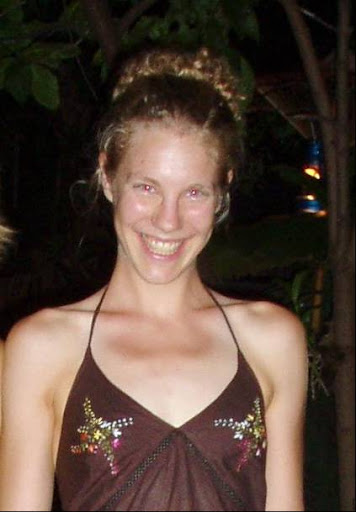
Today we moved to Sungai Daka in a truck, and are ready to start work tomorrow morning. This village is located on one of the biggest rivers in the region, which means….SWIMMING! Albeit with a sarong, and yeah there is a mining operation upstream that uses mercury to extract gold, but I’ll just avoid swallowing the water and everything will be fine.
Sunday, July 20, 2008

Saturday, July 19, 2008
Rice House!
Another long day on the motorbike. I was getting desperate to find our next study village so we set off in a heavy rain to a set of villages with the oldest oil palm in the region. Again the trip consisted of navigating motorbikes through oil palm. Perhaps the most shocking moment was during our drive along the border of
Again the actual surveying of villages was fairly un-extraordinary – we were able to find our next village/destination (Sungai Daka) before heading home at around
Friday, July 18, 2008
Night Hike
Instead of working in the village today, Dessy and I went looking for our next study site. So we headed off with two very cute 20-something young men to check out neighboring villages. Traveling by motorbike in Ketapang is a hate-love relationship for me – now that I’ve gotten over my fear of traveling far to fast up and down slippery dirt roads, I am more aware of the incredible discomfort that comes with gluing myself (and whatever bags I’m carrying) to the motorbike for hours at a time. This is particularly difficult as my legs are simply too long for riding on the back of most bikes here. Yet the travel is almost always exhilarating, and the landscape is often gorgeous – today’s trip is no exception. Baya contains a mountain called Batu Daya, which I saw from afar last year. The mountain consists of four peaks. Depending on the viewer’s location, Batu Daya appears to have either 1, 2, 3 or all 4 peaks. Unfortunately (or fortunately) all roads must be redirected around this massive landscape feature, and I’ve seen all four perspectives in our two days in Baya.
Of course our trip took us past the mountain, particularly stunning this morning, wrapped in clouds…but soon enough we entered the oil palm plantation again, and my thoughts ran away from mountains to the boredom of endless palm trees. Our trip was relatively uneventful (we got a flat tire, observed a pack of otters, took a break at a lake, and checked out a cave full of bats) – and were home by 3 pm. After a quick snack and drink, we put on our hiking sandals and started the 7 kilometer trek to the neighboring village – Kembera. We arrived at around 5 pm to see that almost everyone in the village was at – guess what? – a meeting about the wedding that had happened in Baya the night before.
At the invitation of the village head, we sat down in a house filled with men animatedly talking in a Dayak language that was totally incomprehensible to me. Half of the men were drunk, and I was immediately offered arak which I sipped as the customary leader of the village introduced himself. He asked me the following question:
“Should religion and culture be tied together, or should religion and culture be split?” He was seeking this answer because there was a problem regarding weddings in the village – apparently some of the villagers preferred good Christian weddings without all the customary Dayak traditions (e.g., beating live pigs with live chickens), while others felt that despite the fact that everyone in this area is Christian, the traditions of the culture should be observed as well as the traditions of the religion.
So this was a loaded question. I tried to explain that in my country religion and government are separate – yet religion is intertwined with culture. Religion and culture really can’t be entirely separate, no matter how hard one tries. I don’t think this satisfied the customary village leader, because about five minutes later he asked me the same question for the second time!
Before I had sipped too much arak, we finally left the meeting to get the data we had come for – village population, oil palm status and village facilities (water sources, etc). At around 7 pm we started the walk home in the dark, and I realized this was the first time I’d been outside in the Indonesian rainforest at night. Our path was lighted by an amazing full moon, and the sky was totally clear so that we didn’t have to use our headlamps except under the forest canopy. Marvelous! These moments are the times I most love working in Indonesia.
Of course our trip took us past the mountain, particularly stunning this morning, wrapped in clouds…but soon enough we entered the oil palm plantation again, and my thoughts ran away from mountains to the boredom of endless palm trees. Our trip was relatively uneventful (we got a flat tire, observed a pack of otters, took a break at a lake, and checked out a cave full of bats) – and were home by 3 pm. After a quick snack and drink, we put on our hiking sandals and started the 7 kilometer trek to the neighboring village – Kembera. We arrived at around 5 pm to see that almost everyone in the village was at – guess what? – a meeting about the wedding that had happened in Baya the night before.
At the invitation of the village head, we sat down in a house filled with men animatedly talking in a Dayak language that was totally incomprehensible to me. Half of the men were drunk, and I was immediately offered arak which I sipped as the customary leader of the village introduced himself. He asked me the following question:
“Should religion and culture be tied together, or should religion and culture be split?” He was seeking this answer because there was a problem regarding weddings in the village – apparently some of the villagers preferred good Christian weddings without all the customary Dayak traditions (e.g., beating live pigs with live chickens), while others felt that despite the fact that everyone in this area is Christian, the traditions of the culture should be observed as well as the traditions of the religion.
So this was a loaded question. I tried to explain that in my country religion and government are separate – yet religion is intertwined with culture. Religion and culture really can’t be entirely separate, no matter how hard one tries. I don’t think this satisfied the customary village leader, because about five minutes later he asked me the same question for the second time!
Before I had sipped too much arak, we finally left the meeting to get the data we had come for – village population, oil palm status and village facilities (water sources, etc). At around 7 pm we started the walk home in the dark, and I realized this was the first time I’d been outside in the Indonesian rainforest at night. Our path was lighted by an amazing full moon, and the sky was totally clear so that we didn’t have to use our headlamps except under the forest canopy. Marvelous! These moments are the times I most love working in Indonesia.
Thursday, July 17, 2008
Endless Oil Palm
More than a year after beginning the first mapping in Cali, here I am again – armed with my GPS unit and yellow notebook – ready to commence mapping. We are adding three new villages because the 10 that we completed last year are mostly muslim/Melayu – I’m hoping to see some differences between Dayak and Melayu land use.
My assignment today is oil palm. This village has just a little bit of oil palm – less than 4% of the entire village area. I’m going to map the edges of planted oil palm, of cleared oil palm, and the area that is planned for clearing in the near future. Oil palm plantations are not particularly nice places to do field work – although they offer easy access (lots of roads) they are hot and boring. After 2 hours of work, the motorbike I was riding on broke, and I had to wait in the middle of the plantation for about an hour while my guide found another motorbike. The day ended at the canteen in the oil palm plantation, eating spicy noodles and trying to explain to the security guard why I was puttering around the plantation.
As we work, my guide tells me about previous researchers who have worked in Baya. One woman in particular worked in the region for about 5 years, and was fluent in the local language as well as Indonesian. Amazing! I enjoy the fact that people here are used to westerners, because they pay less attention to me and that at least gives me the illusion of having a bit of privacy.
My assignment today is oil palm. This village has just a little bit of oil palm – less than 4% of the entire village area. I’m going to map the edges of planted oil palm, of cleared oil palm, and the area that is planned for clearing in the near future. Oil palm plantations are not particularly nice places to do field work – although they offer easy access (lots of roads) they are hot and boring. After 2 hours of work, the motorbike I was riding on broke, and I had to wait in the middle of the plantation for about an hour while my guide found another motorbike. The day ended at the canteen in the oil palm plantation, eating spicy noodles and trying to explain to the security guard why I was puttering around the plantation.
As we work, my guide tells me about previous researchers who have worked in Baya. One woman in particular worked in the region for about 5 years, and was fluent in the local language as well as Indonesian. Amazing! I enjoy the fact that people here are used to westerners, because they pay less attention to me and that at least gives me the illusion of having a bit of privacy.
Wednesday, July 16, 2008
Dancing and Drugs, oh my!
Last night I crashed into bed, and then tossed and turned all night to the sound of endless drumming and the shine of a lightbulb that had no off-switch. Why, you might ask? First the music – we arrived on the first night of a three-day wedding celebration, which requires constant music for the duration of the event. Second the light – although villagers in Baya don’t have electricity from the government, they use generators, and like to sleep with the lights on – so they run generators all night and see no need for an off switch for lights!
I awoke this morning to the sound of roosters crowing and a ten year old boy asking – “Do you want to go to the waterfall to bathe?”. How could I say no! So at 6:30 am I along with the rest of the team piled into the truck and traveled about a kilometer to a 10 meter tall waterfall. After scrambling down to the base of the falls, I splashed around in the for about ½ hour until I was thoroughly cold – but I’d made a couple friends from the village too. Physical activity builds strong bonds more quickly than simply talking with folks here – I’ve found that after a hard day of work, or after a game (volleyball), people are more willing to be friendly, instead of simply curious/staring. Of course swimming fully clothed in a waterfall is not much of a bath, so upon returning to the village I bathed again, this time in the river.
After this refreshing morning, we ate breakfast (my life of rice and fish three times a day has commenced again) and then checked out the wedding celebration. It was far from anything I had ever experienced. I suppose I should back up a bit here and inform those who don’t know – Dayak peoples are the “natives” of Borneo. They inhabited this place long before Indonesia was a country, and even before the Dutch arrived. Each village has its own customs and even it’s own language (totally different from the Indonesain language). Dayaks make up almost 50% of the population of Indonesian Borneo, and even the governor of West Kalimantan is Dayak. Native Dayaks were marginalized by the Suharto government, and they are still a minority in Indonesia, both ethnically and religiously – all Dayaks are Catholic, Protestant, or Animist. Somehow old Dayak customs manage to mix well with the new Christian religions (introduced in the mid-1900s) and the wedding incorporates both Christian and Dayak traditions.
When we arrived at the wedding, this is what I observed: A newly constructed platform as an extension of an existing house, build especially for the wedding. In the center of this platform was a structure made from banana fronds, bamboo, rattan, and batik cloth, in the center of which was a jar filled with arak, or rice wine. Around this structure was a group of men playing gongs and drum, and next to them were two men gyrating in a slow dance. Encircling the players were village residents, watching the festivities and drinking arak from a woman walking around and offering the drink to all guests. In addition to arak, many of the men and women were chewing betel nut.
The villagers graciously offered my arak, and then an old woman grabbed my hand and asked me if I’d like to chew betel nut. I’ve encountered this plant before – in Thailand. It stains the teeth red, and I figured it must have some addictive and or drug-like qualities, since those who chew it seem to chew it constantly, like chain-smokers. Here, old women and men make betel-nut packets – they use the nut itself, a couple of different leaves, and a paste made from river snails (yuumm….) and stick the whole thing in the mouth. They chew, and spit bright red juice. The concoction is never swallowed. Locals think the nut makes your teeth strong because the teeth eventually turn black – but from what I can see, everyone who chews betel nut has very few teeth left!
Anyway, I chewed some betel nut along with the leaf and snail paste. It was one of the most nasty, bitter, definitely-not-food things that I’ve ever put in my mouth, and the villagers had a good laugh as I ran to the railing and spit the stuff out. But almost at the same moment, I realized why people chew betel nut – for its narcotic properties. I began to feel unusually warm, and slightly light-headed, and giddy. Of course my new village friends realized this, so they goaded me into a dance around the banana leaf structure – dancing apparently consists of stamping your feet and clapping in time to the music. Nice, but certainly not lindy-hop!
After my dancing and drug experience (at 10 in the morning, no less) I took a nap for about an hour before one of the villagers told me to come watch the pig ceremony. We walked to a pig pen where the villagers were gathered around, nervously waiting for…a woman to throw water on the pig. When you throw water on a pig, it throws water – and feces from its pen – back at you. Somehow this fact got lost in translation and after the water-throwing event I was covered with stinky pig-poo. So I went to wash in the river before the next event of the day, a ceremony where a live pig is beaten with a live chicken. Yes, this falls in the category of animal abuse – but of course I can only watch and smile. Next, a large basket of uncooked rice is prepared. Villagers must fight to win the basket, and whoever wins is…THE WINNER! These events are like carnival games for children, and as far as I can see have very little to do with the actually marriage of two young people.
In the afternoon I decided to clear my head and take a walk to another village, about 2 kilometers away. I was happily walking down the road, enjoying the quiet and the heat, when a motorbike roared up with two men. The man in the back got off the motorbike and asked where I was going, and why I was alone – typical questions in Indonesia. Then he started walking with me – which was fine, except that he complained every step of the way! How hot it was, how far to the next village, the fact that he didn’t have shoes, the fact that he was embarrassed to be seen walking instead of riding a motorbike, how this trip was going to make his skin even blacker. My peaceful walk thus turned into a good story of a man who was willing to bear black skin to spend some quality time with a foreigner who just wanted a few moments alone.
Returning to the village that afternoon, we immediately began our mapping meeting. As we did last year, this year we are mapping villages – but just three of them, and all Dayak. Thus the work is more or less the same, but the place is different. Here, in Baya, a land use and border map already exist, hopefully making our job easy?!? Mapping meeting finished, we bathed in the river, washed our clothes, and ate dinner, then headed to the wedding. Because they’d been downing arak all day, everyone was drunk, and madly dancing around the banana structure. They pulled me in using physical force and I joined the craziness for about 10 minutes before retreating to the quiet of the dining room, where I ate my first pork in Kalimantan. Delicious! How glad I am that I’m not a vegetarian here…
I awoke this morning to the sound of roosters crowing and a ten year old boy asking – “Do you want to go to the waterfall to bathe?”. How could I say no! So at 6:30 am I along with the rest of the team piled into the truck and traveled about a kilometer to a 10 meter tall waterfall. After scrambling down to the base of the falls, I splashed around in the for about ½ hour until I was thoroughly cold – but I’d made a couple friends from the village too. Physical activity builds strong bonds more quickly than simply talking with folks here – I’ve found that after a hard day of work, or after a game (volleyball), people are more willing to be friendly, instead of simply curious/staring. Of course swimming fully clothed in a waterfall is not much of a bath, so upon returning to the village I bathed again, this time in the river.
After this refreshing morning, we ate breakfast (my life of rice and fish three times a day has commenced again) and then checked out the wedding celebration. It was far from anything I had ever experienced. I suppose I should back up a bit here and inform those who don’t know – Dayak peoples are the “natives” of Borneo. They inhabited this place long before Indonesia was a country, and even before the Dutch arrived. Each village has its own customs and even it’s own language (totally different from the Indonesain language). Dayaks make up almost 50% of the population of Indonesian Borneo, and even the governor of West Kalimantan is Dayak. Native Dayaks were marginalized by the Suharto government, and they are still a minority in Indonesia, both ethnically and religiously – all Dayaks are Catholic, Protestant, or Animist. Somehow old Dayak customs manage to mix well with the new Christian religions (introduced in the mid-1900s) and the wedding incorporates both Christian and Dayak traditions.
When we arrived at the wedding, this is what I observed: A newly constructed platform as an extension of an existing house, build especially for the wedding. In the center of this platform was a structure made from banana fronds, bamboo, rattan, and batik cloth, in the center of which was a jar filled with arak, or rice wine. Around this structure was a group of men playing gongs and drum, and next to them were two men gyrating in a slow dance. Encircling the players were village residents, watching the festivities and drinking arak from a woman walking around and offering the drink to all guests. In addition to arak, many of the men and women were chewing betel nut.
The villagers graciously offered my arak, and then an old woman grabbed my hand and asked me if I’d like to chew betel nut. I’ve encountered this plant before – in Thailand. It stains the teeth red, and I figured it must have some addictive and or drug-like qualities, since those who chew it seem to chew it constantly, like chain-smokers. Here, old women and men make betel-nut packets – they use the nut itself, a couple of different leaves, and a paste made from river snails (yuumm….) and stick the whole thing in the mouth. They chew, and spit bright red juice. The concoction is never swallowed. Locals think the nut makes your teeth strong because the teeth eventually turn black – but from what I can see, everyone who chews betel nut has very few teeth left!
Anyway, I chewed some betel nut along with the leaf and snail paste. It was one of the most nasty, bitter, definitely-not-food things that I’ve ever put in my mouth, and the villagers had a good laugh as I ran to the railing and spit the stuff out. But almost at the same moment, I realized why people chew betel nut – for its narcotic properties. I began to feel unusually warm, and slightly light-headed, and giddy. Of course my new village friends realized this, so they goaded me into a dance around the banana leaf structure – dancing apparently consists of stamping your feet and clapping in time to the music. Nice, but certainly not lindy-hop!
After my dancing and drug experience (at 10 in the morning, no less) I took a nap for about an hour before one of the villagers told me to come watch the pig ceremony. We walked to a pig pen where the villagers were gathered around, nervously waiting for…a woman to throw water on the pig. When you throw water on a pig, it throws water – and feces from its pen – back at you. Somehow this fact got lost in translation and after the water-throwing event I was covered with stinky pig-poo. So I went to wash in the river before the next event of the day, a ceremony where a live pig is beaten with a live chicken. Yes, this falls in the category of animal abuse – but of course I can only watch and smile. Next, a large basket of uncooked rice is prepared. Villagers must fight to win the basket, and whoever wins is…THE WINNER! These events are like carnival games for children, and as far as I can see have very little to do with the actually marriage of two young people.
In the afternoon I decided to clear my head and take a walk to another village, about 2 kilometers away. I was happily walking down the road, enjoying the quiet and the heat, when a motorbike roared up with two men. The man in the back got off the motorbike and asked where I was going, and why I was alone – typical questions in Indonesia. Then he started walking with me – which was fine, except that he complained every step of the way! How hot it was, how far to the next village, the fact that he didn’t have shoes, the fact that he was embarrassed to be seen walking instead of riding a motorbike, how this trip was going to make his skin even blacker. My peaceful walk thus turned into a good story of a man who was willing to bear black skin to spend some quality time with a foreigner who just wanted a few moments alone.
Returning to the village that afternoon, we immediately began our mapping meeting. As we did last year, this year we are mapping villages – but just three of them, and all Dayak. Thus the work is more or less the same, but the place is different. Here, in Baya, a land use and border map already exist, hopefully making our job easy?!? Mapping meeting finished, we bathed in the river, washed our clothes, and ate dinner, then headed to the wedding. Because they’d been downing arak all day, everyone was drunk, and madly dancing around the banana structure. They pulled me in using physical force and I joined the craziness for about 10 minutes before retreating to the quiet of the dining room, where I ate my first pork in Kalimantan. Delicious! How glad I am that I’m not a vegetarian here…
Tuesday, July 15, 2008
Into the Jungle
This morning I woke up in a hotel room with room service, air conditioning, and running water. Tonight I’m going to bed in room with three other people, in a village in the middle of the rain forest with no electricity and where you must bathe in the river. The village is called Baya, and it has the strongest Dayak culture of any the places I’ve yet visited.
My day was dominated by traveling. After checking out of my hotel room, I hired an ojek to drive me by motorbike to the bus station. I’ve stared to use my foreign-ness as a bargaining chip – the 20-year old ojek driver agreed to knock down the price (from $2 to $1.50) for the chance to get a cellphone photo with me, the buleh. After arrive at the bus station ½ hour early for a bus that was leaving at 11 am, I then proceeded to wait two more hours until the bus finally left at about 1:30 pm. Indonesia! This is the first time I’ve taken the bus in Ketapang, and it was similar to an ojek, but instead of feeling like I was going to be squashed by every truck encountered along the way, I had the impression that the bus driver was trying to run down every small child, old person, vegetable salesperson, dog, and bicycle rider along the side of the road. To my near disbelief, we made the trip with zero deaths or accidents! In Telok Melano, I met the rest of the team and we quickly hired a boat to take us upriver, to a port from which we would then try to find ground transportation to our final destination, Baya.
A small digression. This year our team consists of six Indonesians, plus myself. This is the same group of people I worked with last year, and we have already developed a comfort in living and trust in work that I have rarely experienced in my life. Each of us has our strange quirks and moments, and each contributes to the team in essential ways. Dessy is our fearless leader, well-spoken and the oldest in the group. Yadi is a great interviewer, and is as hippy as a devout Indonesian Muslim man can be. Windi is the social heart and logistic coordinator of the group, and because she is married has broken more than a few hearts in Ketapang. Pita is small and adorable, but is infinitely competent and had this sarcastic sense of humor that I appreciate, because it is rarely found in Indonesia. Neli is quiet and tall, and has a calmness about her that keeps everyone in the group grounded. The baby and only Christian/Dayak of the group is Tono, a smart and goofy young man who is rain-forest-smart. I’m about to share two intense weeks with this team.
Back to my story: Finding ground transport was a bit of a shot in the dark – transportation is never guaranteed in Kalimantan, especially if it is 1) early evening, 2) not booked in advance and 3) you don’t know anyone in the village where you are going. Perhaps the rest of the team was worried about this sticky situation, but I was so blown away by being back in the jungle I successfully ignored the fact that we didn’t know where we would be sleeping in the evening. The boat ride was gorgeous. Packed in to a small speed boat with all our belongings, there was nothing to do but look for monkeys in the trees along the river. And the monkeys cooperated – I saw three species during our 1.5 hour boat ride. One of the biggest similarities between humans and monkeys is our shared love of making noise – like humans, monkeys here in Kalimantan seem to chatter constantly, and supplement this chatter by shaking branches and screaming. Thus it was not hard to locate the primates eating fruit from trees overhanging the river as we zipped by. I have been too long in cities – even the air smelled sweet as we entered the jungle.
Upon arrival in Matan, the final river port, we disembarked from the boat (I couldn’t feel my legs for approximately five minutes) and asked the locals if there was anyone willing to drive us to Baya. Amazingly enough, a truck was leaving to Baya at that very moment…so we quickly piled our belongings in the back and commenced the third leg of our trip, into the mountains. By this time it was getting dark outside, so we stood in the back of the truck (it was sort of a dump truck, but the back was filled with people and belongings) and appreciated the sun set over the mountains to the west. The reason that we could see the sun set (usually not possible in the middle of a rain forest) is that we were driving through endless oil palm plantation, newly cleared so that the trees were no taller than 2 meters. As with most transport in Kalimantan, we were going so fast that all bumps threw us (the passengers in the back) into the air. My feet spent much time flying during the giddy trip to Baya. After sunset, the trip became truly trippy/giddy – the sky was totally clear, a nearly full moon was rising, and we were ducking oil palm fronds and trees as the truck thundered into the older part of the plantation.
Finally arriving in Baya was a relief. Please realize that there are no hotels/guest house or cell phones in these villages – we could not sleep in a place especially reserved for guests, nor could we call ahead to inform the villagers that 7 people plus belongings would like to spend the night. Luckily people in Kalimantan are usually extremely welcoming to guests – we were immediately introduced to the village customary leader, fed noodles, and offered a couple rooms to sleep in.
My day was dominated by traveling. After checking out of my hotel room, I hired an ojek to drive me by motorbike to the bus station. I’ve stared to use my foreign-ness as a bargaining chip – the 20-year old ojek driver agreed to knock down the price (from $2 to $1.50) for the chance to get a cellphone photo with me, the buleh. After arrive at the bus station ½ hour early for a bus that was leaving at 11 am, I then proceeded to wait two more hours until the bus finally left at about 1:30 pm. Indonesia! This is the first time I’ve taken the bus in Ketapang, and it was similar to an ojek, but instead of feeling like I was going to be squashed by every truck encountered along the way, I had the impression that the bus driver was trying to run down every small child, old person, vegetable salesperson, dog, and bicycle rider along the side of the road. To my near disbelief, we made the trip with zero deaths or accidents! In Telok Melano, I met the rest of the team and we quickly hired a boat to take us upriver, to a port from which we would then try to find ground transportation to our final destination, Baya.
A small digression. This year our team consists of six Indonesians, plus myself. This is the same group of people I worked with last year, and we have already developed a comfort in living and trust in work that I have rarely experienced in my life. Each of us has our strange quirks and moments, and each contributes to the team in essential ways. Dessy is our fearless leader, well-spoken and the oldest in the group. Yadi is a great interviewer, and is as hippy as a devout Indonesian Muslim man can be. Windi is the social heart and logistic coordinator of the group, and because she is married has broken more than a few hearts in Ketapang. Pita is small and adorable, but is infinitely competent and had this sarcastic sense of humor that I appreciate, because it is rarely found in Indonesia. Neli is quiet and tall, and has a calmness about her that keeps everyone in the group grounded. The baby and only Christian/Dayak of the group is Tono, a smart and goofy young man who is rain-forest-smart. I’m about to share two intense weeks with this team.
Back to my story: Finding ground transport was a bit of a shot in the dark – transportation is never guaranteed in Kalimantan, especially if it is 1) early evening, 2) not booked in advance and 3) you don’t know anyone in the village where you are going. Perhaps the rest of the team was worried about this sticky situation, but I was so blown away by being back in the jungle I successfully ignored the fact that we didn’t know where we would be sleeping in the evening. The boat ride was gorgeous. Packed in to a small speed boat with all our belongings, there was nothing to do but look for monkeys in the trees along the river. And the monkeys cooperated – I saw three species during our 1.5 hour boat ride. One of the biggest similarities between humans and monkeys is our shared love of making noise – like humans, monkeys here in Kalimantan seem to chatter constantly, and supplement this chatter by shaking branches and screaming. Thus it was not hard to locate the primates eating fruit from trees overhanging the river as we zipped by. I have been too long in cities – even the air smelled sweet as we entered the jungle.
Upon arrival in Matan, the final river port, we disembarked from the boat (I couldn’t feel my legs for approximately five minutes) and asked the locals if there was anyone willing to drive us to Baya. Amazingly enough, a truck was leaving to Baya at that very moment…so we quickly piled our belongings in the back and commenced the third leg of our trip, into the mountains. By this time it was getting dark outside, so we stood in the back of the truck (it was sort of a dump truck, but the back was filled with people and belongings) and appreciated the sun set over the mountains to the west. The reason that we could see the sun set (usually not possible in the middle of a rain forest) is that we were driving through endless oil palm plantation, newly cleared so that the trees were no taller than 2 meters. As with most transport in Kalimantan, we were going so fast that all bumps threw us (the passengers in the back) into the air. My feet spent much time flying during the giddy trip to Baya. After sunset, the trip became truly trippy/giddy – the sky was totally clear, a nearly full moon was rising, and we were ducking oil palm fronds and trees as the truck thundered into the older part of the plantation.
Finally arriving in Baya was a relief. Please realize that there are no hotels/guest house or cell phones in these villages – we could not sleep in a place especially reserved for guests, nor could we call ahead to inform the villagers that 7 people plus belongings would like to spend the night. Luckily people in Kalimantan are usually extremely welcoming to guests – we were immediately introduced to the village customary leader, fed noodles, and offered a couple rooms to sleep in.
Petai Udang
I’ve discovered my new favorite dish in Indonesia. Petai udang. Which means Shrimp Petai. A spicy shrimp-veggie dish served with rice. What, you ask, is petai? It is a quarter sized green leguminous seed that comes from rain forest trees. The consistency is like uncooked lima bean, and the taste is sort of like asparagus. Delicious! I know you are dubious, but don’t knock it until you try it. I ordered it for dinner last night by accident, and I am now in love.
Returning to more serious topics – I’m off to the field tomorrow, and will be back to a computer in about two weeks. Today was yet another day of getting letters – in the third city thus far – and I am now free (more or less) to continue research in this fine bureaucratic nation.
Sunday, July 6, 2008
Things to Think About
Coming back to a place after being away for a while is always bittersweet. Pontianak is no exception.
I flew from Jakarta to Pontianak Saturday night, and arrived to see a couple of my good friends waiting eagerly at the gate. After greeting Indonesian style (no hugging, just double-cheek fake kisses for the girls, and handshakes for the guys), we loaded my three huge bags of equipment into the only taxi that would take us (the others all demanded that the bags be divided among two taxis). Driving to the office was like coming home - mostly because I could suddenly see the stars and hear the crickets again after far too long in airports and Jakarta, both bereft of natural life. Pontianak seems very welcoming - last year I was overwhelmed and more than a bit scared arriving in a place where I knew no one!
Bang Umar and Ka Tia, plus their two daughters, met me at the office. Living with them is kind of like living with an older sibling - they are too young to be my parents, but definitely older than I, both in responsibility and age. I dropped my bags in the spare room and we went to buy some food - mixed stir fried veggies - before I fell into bed, exhausted.
Somehow I'd forgotten the tiredness that comes with speaking a foreign language all day. This year is immeasurably (or perhaps very measurably - in hundreds of words) better than the past because I can speak and understand everyday conversations. However, far more effort is required to understand Indonesian than English. If I zone out, even for a moment, I lose the train of conversation and have to stop whoever is talking to me, saying "sorry, can you repeat what you just said?"
At the airport I was accosted by a number of people, who all wanted to speak with the white girl. The photo-takers mobbed me at one point, and I stood with a forced smile on my face while they all posed for photos. Photo-taking in Indonesia, as in the US, often comes with a snowball effect - one person wants a photos, and then her friend, and suddenly half the airport! So if you see random photos of a curly-haired buleh in the hands of someone from Sumatra, don't be surprised =)
More tomorrow - I start the Pontianak visa process in the morning, and will be playing with sulfuric acid in the afternoon. Fun times in the equator city!
I flew from Jakarta to Pontianak Saturday night, and arrived to see a couple of my good friends waiting eagerly at the gate. After greeting Indonesian style (no hugging, just double-cheek fake kisses for the girls, and handshakes for the guys), we loaded my three huge bags of equipment into the only taxi that would take us (the others all demanded that the bags be divided among two taxis). Driving to the office was like coming home - mostly because I could suddenly see the stars and hear the crickets again after far too long in airports and Jakarta, both bereft of natural life. Pontianak seems very welcoming - last year I was overwhelmed and more than a bit scared arriving in a place where I knew no one!
Bang Umar and Ka Tia, plus their two daughters, met me at the office. Living with them is kind of like living with an older sibling - they are too young to be my parents, but definitely older than I, both in responsibility and age. I dropped my bags in the spare room and we went to buy some food - mixed stir fried veggies - before I fell into bed, exhausted.
Somehow I'd forgotten the tiredness that comes with speaking a foreign language all day. This year is immeasurably (or perhaps very measurably - in hundreds of words) better than the past because I can speak and understand everyday conversations. However, far more effort is required to understand Indonesian than English. If I zone out, even for a moment, I lose the train of conversation and have to stop whoever is talking to me, saying "sorry, can you repeat what you just said?"
At the airport I was accosted by a number of people, who all wanted to speak with the white girl. The photo-takers mobbed me at one point, and I stood with a forced smile on my face while they all posed for photos. Photo-taking in Indonesia, as in the US, often comes with a snowball effect - one person wants a photos, and then her friend, and suddenly half the airport! So if you see random photos of a curly-haired buleh in the hands of someone from Sumatra, don't be surprised =)
More tomorrow - I start the Pontianak visa process in the morning, and will be playing with sulfuric acid in the afternoon. Fun times in the equator city!
Monday, June 30, 2008
Indonesia 2.0
The trip from Hartford to Jakarta was as painless as possible. I am hauling three gigantic duffel bags full of equipment (totaling around 180 pounds - far far overweight). These include 200 bottles for taking water samples, 12 buckets for catching and measuring rainfall, a water velocimeter in a case that looks like it was made for a gun, two laptops, and a 10 pound, $15,000 instrument for measuring water quality. Needless to say, I'm relived that everything arrived safe and sound! The flight was slightly amazing - we passed through the arctic circle from Chicago to Hong Kong, and we could see icebergs for much of the trip, and then an amazing Russian/Mongolian landscape. Unfortunately it was cloudy over China, so no great wall for me this time =)
Now, after slightly more than six months away from Indonesia, I'm back in Jakarta. The experience is slightly deja vous. The government offices still have way too many pleasant employees, who take far too long to prepare letters and documents given the difficulty of the task. However this time I'm prepared - I have a good book to read while I'm waiting!
Now I have to grab lunch and return to the immigration office (for the third time in two days) to get a letter. I'll try and update this blog regularly for all my admirers...thanks for reading!
Now, after slightly more than six months away from Indonesia, I'm back in Jakarta. The experience is slightly deja vous. The government offices still have way too many pleasant employees, who take far too long to prepare letters and documents given the difficulty of the task. However this time I'm prepared - I have a good book to read while I'm waiting!
Now I have to grab lunch and return to the immigration office (for the third time in two days) to get a letter. I'll try and update this blog regularly for all my admirers...thanks for reading!
Sunday, December 16, 2007
Back in the US
I'm writing from Chicago, where it is 4:30 pm Chicago time and 6:30 am Pontianak time. I've spent a total of about 20 hours on planes so far (Bali to Jakarta to Singapore to Hong Kong to Chicago) and am looking forward to only two-point-five more hours! New York, here I come.
The strangest things about coming home to the US?
First, the water fountains. Drinking water from the tap is indulgent, and I have to think twice before taking a sip.
Second, the size of people. In Asia, people are generally slimmer and smaller, I feel like I'm in an airport-ful of giants.
Third, the smells. I'd forgotten the sharp aroma of toasted bread and cheese. Yummy.
Finally, the cold. I've been freezing since leaving Singapore - despite wearing a sweatshirt, socks, long pants etc. the flights have been on the slightly shivery side, and stepping of the plane in Chicago was shocking!
Because this blog is named, Kim-in-Indonesia blog, this is the official last entry. I'll back-post about my Bali travels sometime this week. Thanks for reading!
kim
The strangest things about coming home to the US?
First, the water fountains. Drinking water from the tap is indulgent, and I have to think twice before taking a sip.
Second, the size of people. In Asia, people are generally slimmer and smaller, I feel like I'm in an airport-ful of giants.
Third, the smells. I'd forgotten the sharp aroma of toasted bread and cheese. Yummy.
Finally, the cold. I've been freezing since leaving Singapore - despite wearing a sweatshirt, socks, long pants etc. the flights have been on the slightly shivery side, and stepping of the plane in Chicago was shocking!
Because this blog is named, Kim-in-Indonesia blog, this is the official last entry. I'll back-post about my Bali travels sometime this week. Thanks for reading!
kim
Monday, December 10, 2007
Press for TFG
Tropical Forest Group has generated some amazing press coverage regarding forests and the REDD (reduced emissions from deforestation in developing countries) during its time in Bali.
First, we sponsored a group of Balinese dancers who were featured as the front page picture in the Jakarta Post:

Second, we did a little enactment of the US stand on emissions reductions, which was photographed by AP.
And every day we've been putting up our trees (photo courtesy of JP Jewell).
First, we sponsored a group of Balinese dancers who were featured as the front page picture in the Jakarta Post:

Second, we did a little enactment of the US stand on emissions reductions, which was photographed by AP.
And every day we've been putting up our trees (photo courtesy of JP Jewell).
Saturday, December 1, 2007
Durian
It is finally durian season in Kalimantan (though my friends tell me the durian is much too expensive, I really should wait a couple weeks to buy). Thus at delegated places around the city, people are selling truckfulls of durian. Apparently buying the fruit is an art - my Indonesian friends checked out perhaps 100 different fruits before buying 6 buah (fruit). Durian should be chosen by appearance and most importantly smell. The yellower and more fragarent the fruit, the more delicious. We dragged the fruit home and opened them one at a time, tasting and exclaiming on the texture (wet or dry), sweetness (too sweet, or not enough) and acidity (many durian are a bit acid). I like durian, but I think the durian I tried in Bangkok last year was better than the local kind -- sorry Indonesia =)
Wednesday, November 28, 2007
Prepping for Bali COP13
Starting next week, I will be in Bali for the UN COP13 climate change negotiations. I'm working with the Tropical Forest Group (TFG). Among other things, TFG will be sponsoring a large tree display outside the conference center and a dance show (traditional Balinese dance!) to visually illustrate the importance of forest conservation.
The group has also set up a blog that will give a running commentary of the conference.
Among other things delegates at COP13 will be negotiating post-2012 climate change strategies. One strategy set to receive tons of press in the upcoming conference is REDD (Reduced Emissions from avoided Deforestation in Developing countries). In the past, countries have not been able to trade carbon credits in this category. Currently, tropical deforestation causes about 20% of greenhouse gas emissions. So REDD is a potentially important part of any future emissions reduction strategy!
The group has also set up a blog that will give a running commentary of the conference.
Among other things delegates at COP13 will be negotiating post-2012 climate change strategies. One strategy set to receive tons of press in the upcoming conference is REDD (Reduced Emissions from avoided Deforestation in Developing countries). In the past, countries have not been able to trade carbon credits in this category. Currently, tropical deforestation causes about 20% of greenhouse gas emissions. So REDD is a potentially important part of any future emissions reduction strategy!
Saturday, November 17, 2007
Data Entry Time!
I’m back in Pontianak for a couple of weeks to finish up with data entry, pack up my room, and say goodbye to everyone before heading to Bali for the UN COP13 on climate change. Life is boringly happy here, with lots of time at the gym, and hanging out with my ex-pat and Indonesian friends. Email will be easier from now on, thank goodness. Terima Kasih (thanks) to everyone who sent happy birthday wishes!
Tuesday, November 13, 2007
Birthday in Kalimantan
Today was one of the most memorable birthdays of my life. I woke up at
Dessy talked with the schoolmaster and arranged a evening big feast, and also extended invitations to all the important villagers – kepala desa, kepala dusun, Muslim leaders, village secretary, etc. I hung out in the village all morning, and in the afternoon walked to the mountains to check my email (my phone only receives a signal on the top of tall mountains…go figure). Of course all the villagers thought I was crazy to walk so far away alone (“weren’t you scared!?!), but it was quite nice to appreciate the rubber gardens, birds, and hills of Ketapang one more time before returning to more developed parts of the country/world. Unfortunately, the current frequent rains mean lots of mosquitoes, so my email checking was interrupted by frequent mosquito swatting.
After getting back to the village in late afternoon, I hung out with the village women and learned how to cook krupuk – dried tapioca deep fried in oil so that it puffs up. A uniquely Indonesian snack, krupuk comes in all shapes and sizes – we were cooking one with a flowery motif that came in a variety of colors. Unfortunately for me (but probably fortunately for health) I don’t enjoy krupuk, but it was fun to cook nevertheless.
The evening party started after the evening prayers, at about
After eating we just hung out, talked, and then (predictably) the photos started. I took a photo with most of the women and children in the house, before finally escaping around
Subscribe to:
Posts (Atom)